

2026 Southeastern Massachusetts Food System Assessment
Building a Stronger Food System for Southeastern Massachusetts
Six counties. One connected food system. A shared plan for a more resilient future.
The Marion Institute’s Southcoast Food Policy Council, is leading a regional Food System Assessment across six interconnected counties in Southeastern Massachusetts.
By combining regional data with the knowledge and experiences of the people who grow, catch, distribute, prepare, and access our food, we’re building a clearer picture of what is working, where gaps exist, and what our region needs to build a stronger, more resilient food system.
OUR FOOD SYSTEM IS CONNECTED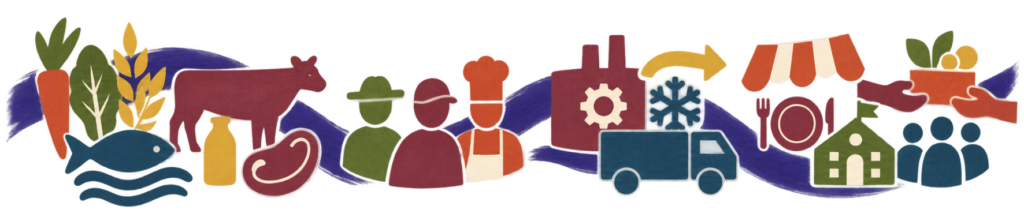 Our food system doesn’t stop at county lines.
Food moves throughout Southeastern Massachusetts every day.
A farmer may grow food in one county, use processing or storage infrastructure in another, and sell it somewhere else. Seafood moves from docks to distributors, restaurants, schools, and communities. Workers, transportation, markets, land, cold storage, processing facilities, emergency food resources, and other infrastructure are shared across the region.
What happens in one part of our food system can affect the rest.
That’s why we’re looking at Southeastern Massachusetts as one interconnected regional food system – rather than six separate counties. The assessment is designed to identify shared gaps and opportunities and help guide future coordination and investment.
PROJECT SNAPSHOT
A regional assessment built on data + community knowledge
- 6 Counties
- 101 CARAT Indicators
- 52 Fishing and Seafood Indicators
- 7 Themes of Food System Resilience
- 2 Complementary Assessment Approaches
- 1 Connected Regional Food System
The 2026 Food System Assessment (FSA) for Southeastern MA combines an updated technical assessment, building on the Southcoast Food Policy Council’s 2021 FSA, with a community-driven assessment using the Community and Agriculture Resilience Audit Tool (CARAT).
TWO WAYS OF LOOKING AT ONE FOOD SYSTEM We’re looking at the food system from two different angles.
Technical Food System Assessment
We are collecting and analyzing regional data to understand the systems, resources, infrastructure, and conditions that shape how food moves throughout Southeastern Massachusetts.
What does the data tell us?
Community-Driven CARAT Assessment
We’re also working directly with community partners and stakeholders throughout the food system to understand what the numbers alone can’t tell us.
What are people experiencing on the ground?
Data + People = One clearer picture of our regional food system
Combining these approaches helps identify shared strengths, gaps, opportunities, and infrastructure needs across the region.
REGIONAL PARTNERS
Local knowledge. Regional collaboration.
The Marion Institute’s Southcoast Food Policy Council are leading a coordinated regional approach—bringing together local organizations, connecting community expertise, and advancing food system priorities across Southeastern Massachusetts.
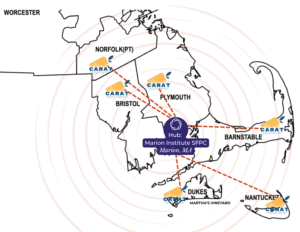
- Barnstable County – Cape Cod Cooperative Extension
- Bristol County – Southcoast Food Policy Council
- Dukes County – Island Grown Initiative
- Nantucket County – Sustainable Nantucket + Nourish Nantucket
- Norfolk County – Town of Randolph, South Shore Food Bank, and Bay State Community Services
- Plymouth County – Old Colony Planning Council, Plymouth County Commissioners + Plymouth County Sheriff’s Department
WHAT IS CARAT?
CARAT puts community knowledge at the center.
CARAT – the Community & Agriculture Resilience Audit Tool – is the community-driven part of the assessment.
Developed by the North American Food Systems Network and Indiana University, CARAT brings community stakeholders together to assess the strengths, resources, challenges, and resilience of their local food system.
Instead of relying only on traditional data, CARAT helps capture things that can be harder to measure – including collaboration, accessibility, emergency preparedness, local knowledge, community relationships, and other forms of soft infrastructure. By providing a framework for measuring these indicators, CARAT allows us to better understand how strong the foundations are in our communities, to support a thriving local food system.
For Southeastern Massachusetts, additional seafood and fishing indicators have also been incorporated to better reflect the importance of our region’s marine food economy.
THE SEVEN CARAT THEMES
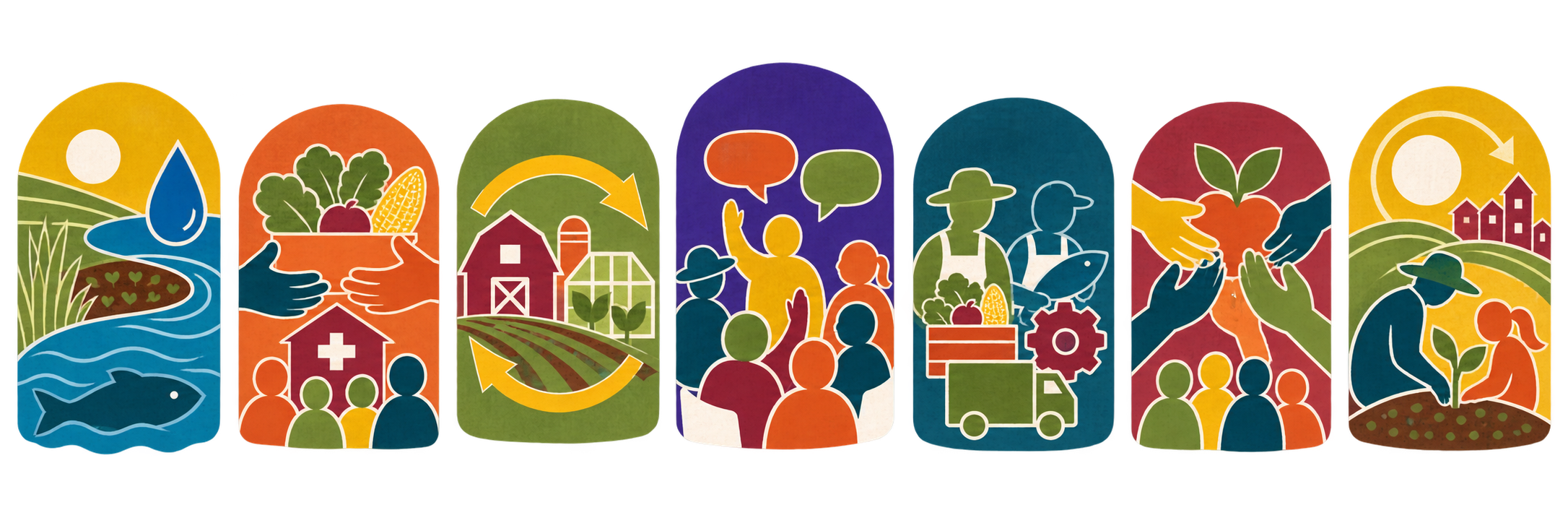
Seven themes help us assess the resilience of the whole food system.
CARAT organizes its 101 indicators into seven interconnected themes. Together, they help communities examine the resources, relationships, infrastructure, and conditions that shape their local food system.
1. Natural Resource Management, Use, Conservation, and Preservation
Protecting farmland, marine ecosystems, soil, land, and water while improving access to working lands and waterfronts.
2. Community Health and Well-Being
Making nutritious, affordable, and culturally appropriate food accessible to everyone—including during emergencies.
3. Community Self-Resilience in Food
Strengthening the community’s ability to produce and access food locally while reducing dependence on unpredictable outside supply chains.
4. Distributed and Democratic Leadership
Ensuring that people throughout the food system have a meaningful role in decision-making, particularly those who have historically been excluded or marginalized.
5. Focus on Local Farmers, Fishers, Food Processors, and Food Distributors
Expanding opportunities for local food producers and strengthening the infrastructure needed to process, distribute, and market local food.
6. Food Sovereignty
Building a food system that is equitable, accessible, inclusive, and shaped by the people it serves.
7. Place-Based Economics
Keeping resources and ownership within the region while developing the education, leadership, and skills needed to support the next generation of food-system leaders and producers.
HOW THE PROCESS WORKS From community knowledge to regional action
1. LISTEN
Bring together Community Advisory Boards representing different parts of each county’s food system.
2. LEARN
Research the 153 indicators and gather information through data, interviews, focus groups, workshops, community events, and lived experience.
3. ASSESS
Community Advisory Boards distill the information into an assessment of each indicator and where it stands in their community.
4. CONNECT
Combine county-level findings with technical data to understand patterns across Southeastern Massachusetts and generate community-led priorities.
5. ACT
Identify shared priorities and opportunities for coordination, funding, policy, and investment.
WHY THIS MATTERS
Strong Networks Build Resilience.
Understanding where our food system is strong – and where it is vulnerable – can help communities make more informed decisions about what comes next.
Strong networks combined with good data, breaks down siloes and increases our ability to invest in our local food systems with even greater impact.
The assessment can help identify needs and opportunities related to:
- Cold storage
- Processing space
- Docks & waterfront access
- Farmland
- Transportation
- Labor & workforce
- Distribution
- Emergency planning
- Local markets
The goal is to create a shared regional picture that can improve coordination and help inform funding, planning, policy, and investment.
FROM ASSESSMENT TO ACTION
At the end of this process, we’ll have more than a report.
The project is designed to produce a comprehensive regional Food System Assessment for Southeastern Massachusetts, establish a baseline understanding of regional food system resilience, identify gaps and opportunities at both the county and regional levels, and create a roadmap for keeping this information current over time.
UNDERSTAND
Where are we now?
PRIORITIZE
Where are the greatest opportunities and needs?
ACT
How can communities, funders, policymakers, producers, and organizations work together?
GLOSSARY
New to food systems work? Start here.
What is a food system?
The people, places, resources, infrastructure, and processes involved in producing, catching, processing, transporting, selling, preparing, accessing, and disposing of food.
What is a foodshed?
Much like a watershed describes how water moves through a region, a foodshed describes how food moves from where it is produced to where it is consumed.
What is CARAT?
The Community & Agriculture Resilience Audit Tool, the community-driven part of the assessment.
What is hard infrastructure?
Physical resources that help the food system function, such as processing space, docks, cold storage, and distribution infrastructure.
What is soft infrastructure?
The relationships, policies, planning, access, labor, transportation, knowledge, and other systems that help the food system function.
What is food sovereignty?
An approach focused on an equitable, accessible, and inclusive food system and greater community control of food-system decisions.
GET INVOLVED
Your experience is part of the data.
A strong regional assessment can’t be built from numbers alone. Farmers, fishers, food producers, food businesses, community organizations, residents, and others who interact with our food system hold knowledge that traditional datasets may never capture.
Help us build a more complete picture of Southeastern Massachusetts’ food system.
Additional Resources
Partners/County Leads
Barnstable County Lead
Cape Cod Cooperative Extension
Andrea Scarpellini, Food Access Coordinator, CCCE
Dukes County Lead
Island Grown Initiative
Noli Taylor, Co-Executive Director
Caroline Pam, Co-Executive Director
Nantucket County Lead
Sustainable Nantucket and Nourish Nantucket
Posie Constable, Managing Director, Sustainable Nantucket
Meg Browers, Executive Director, Nourish Nantucket
Norfolk County Leads
Bay State Community Services,
South Shore Food Bank, Town of Randolph
Ania Amedee, Mass in Motion Coordinator, Bay State Community Services
Michelle Tyler, Town Planner, Town of Randolph
Pam Denholm, Executive Director, South Shore Food Bank
Plymouth County Lead
Old Colony Planning Council
Joanne Zygmunt, Senior Planner, Comprehensive Planning and Sustainability
Coordinator + Bristol County Lead
Marion Institute
Liz Wiley, Executive Director
Rita Higgins, CARAT Project Manager
Christine Smith, Southcoast Food Policy Council Coordinator
Emma DeCola, Community Relationship & CARAT Research Support
CoP Facilitator
Northbound Ventures Consulting
Holly Fowler, Co-founder & CEO


