

Building a Healthier Community Through Food Security.
The Marion Institute’s Southcoast Food Policy Council (SFPC) is a coalition of food pantries, farms, foundations, and social service agencies working together to promote local food security: “a situation in which all community residents obtain a safe, culturally acceptable, nutritionally adequate diet through a sustainable food system that maximizes community self-reliance and social justice.”
Who We Are
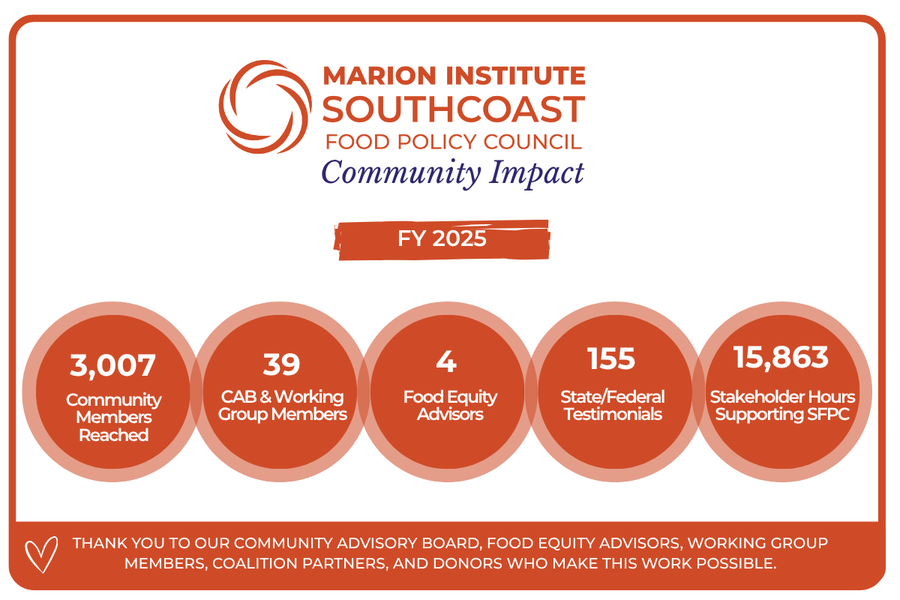
The Marion Institute’s Southcoast Food Policy Council (SFPC) builds a thriving, inclusive regional food system that strengthens community health and eliminates food insecurity. Since launching in 2020, SFPC has fostered collaboration among local food producers, consumers, and community partners to address food-related challenges in Southeastern Massachusetts.
By mobilizing stakeholders, advancing policy solutions, and investing in food system resilience, the SFPC is shaping a future where healthy, local food is accessible to all.
Mission
We connect, convene, and advocate for local food producers, consumers, and community leaders who seek policies and systems that strengthen our regional food system, improve community health, and eliminate food insecurity.
Vision
A thriving, inclusive, and culturally diverse regional food system in which we all benefit from healthful, accessible, and affordable foods.
Values
- We build a focused, transparent, and effective coalition through clear goals, open communication, and impactful action.
- We reflect the cultural and racial diversity of the community we serve.
- We seek information, ideas, and inspiration from peer organizations across the state, the country, and the world.
- We believe that greater knowledge of nutrition, food systems, and local economies drives greater consumption of local foods.